
there is a bottle of something in your bathroom right now that expired a while ago. ibuprofen, maybe, or an old antibiotic, or the antihistamine you buy once and forget. and the question everyone quietly asks, standing there at 2am with a headache or a sick kid, is the same: does this still work, or will it hurt me.
the honest answer is more interesting than the label suggests, and it splits cleanly in two. for most everyday pills, the expiration date is far more conservative than you think, and the drug is largely fine for years past it. for a specific, short list of medications, the date is a hard line you do not cross, because a weak dose at the wrong moment can kill you. knowing which pile a given drug falls into is the actual skill, and it is worth more than any shopping list.
A note before anything else: this is general information, not medical advice. Talk to your doctor or pharmacist before changing how you fill, store, or use any medication.
First, why your medicine cabinet matters more than it used to
It is tempting to treat your home pharmacy as an afterthought, something you top up when you run out. The supply behind it is shakier than that comfortable habit assumes. The United States makes very little of its own medicine at the molecular level. As of 2019 the FDA testified that only about 28 percent of the facilities making active drug ingredients for the US market were on American soil. Most of the rest sit in China, India, and Europe, and India, which supplies roughly 40 percent of American generic prescriptions, leans on China for most of its own raw ingredients.
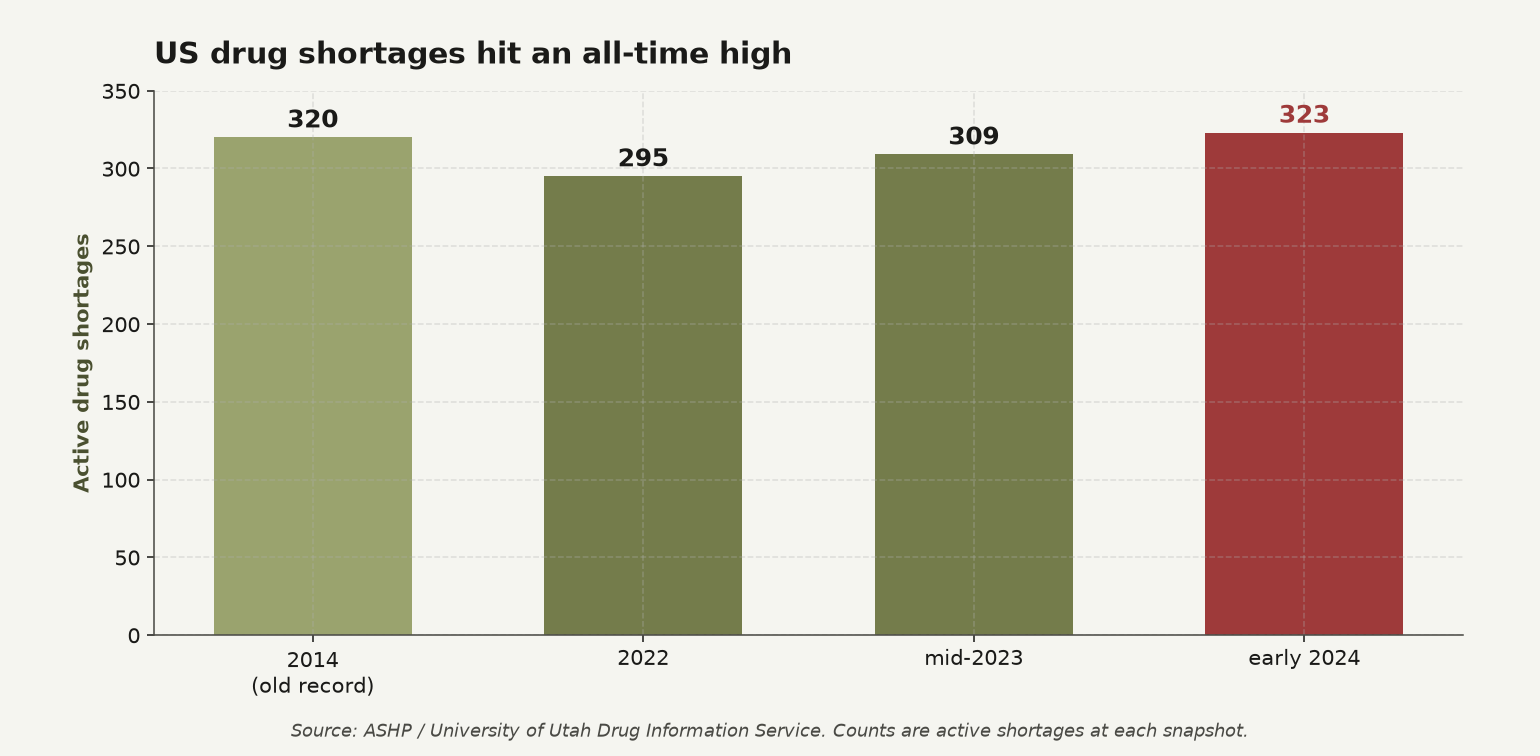
That long, thin supply line breaks more than people realize. In the first quarter of 2024, pharmacists were tracking 323 active drug shortages, the most ever recorded since counting began in 2001.
And it does not take a trade war. When Hurricane Helene flooded a single Baxter plant in North Carolina in September 2024, a factory that made around 60 percent of the intravenous fluids used in US hospitals, it triggered a national IV-fluid shortage that forced hospitals to ration and postpone surgeries for months. One plant, one storm, one shortage that reached the whole country. That is the case for keeping a modest, sensible buffer of what your household actually depends on. Not hoarding. A cushion.
So, do expired medications still work?
Here is the part that surprises people. For most solid pills and capsules, stored properly and unopened, the answer is largely yes, for a long time.
The strongest evidence comes from the military. The US government did not want to throw out billions of dollars of stockpiled medications every few years, so the FDA and Department of Defense ran the Shelf Life Extension Program, testing drugs long past their printed dates. The result: about 88 percent of the drug lots they tested stayed within specification for an average of 66 months, more than five years, beyond the labeled expiration. A separate 2012 study tested medications that had expired 28 to 40 years earlier and found that 12 of the 14 active ingredients still held at least 90 percent of their labeled potency, the same threshold the FDA uses for a fresh drug.
The expiration date, in other words, is not the moment a pill turns to poison. It is the last date the manufacturer will guarantee full potency and safety under proper storage. Most of the time there is a real margin past it.
But read the fine print on that finding, because it is doing a lot of work. Those were unopened products, in controlled storage, individually lab tested before use. That is not the bottle sweating in your steamy bathroom with the cap off. Heat, humidity, light, and air all accelerate the decline, which is why the single best thing you can do for your medicine is store it somewhere cool, dry, and dark, and not the bathroom cabinet. A bedroom drawer or a kitchen cabinet away from the stove and sink beats the bathroom every time. Keep pills in their original labeled containers.
The drugs where the date is a hard line
This is the section that matters, and the one general "expired meds are fine" articles get dangerously wrong. A short list of medications genuinely lose the potency you are betting your life on, or degrade into something worse, and for these you treat the expiration date as firm and rotate your stock before it passes.
| Never rely on past expiration | Why |
|---|---|
| Nitroglycerin | Loses potency fast; a dud tablet during cardiac chest pain can be fatal |
| Insulin | Loses glucose-lowering strength, worse at room temperature; under-dosing is dangerous |
| EpiPens / injectable epinephrine | The epinephrine oxidizes and weakens; a weak dose can fail to stop anaphylaxis |
| Liquid antibiotics and suspensions | Lose potency and the preservative breaks down, allowing microbial growth |
| Eye drops and other sterile liquids | Sterility and preservatives fail after the date, and after opening |
| Old tetracycline | The one classically toxic-when-expired drug; degraded forms have been linked to kidney injury |
| Narrow-margin drugs (some seizure meds, blood thinners) | A small potency loss can drop them below the level that works, with severe consequences |
The rule of thumb: for anything life-sustaining or emergency, an inhaler, an EpiPen, insulin, a heart medication, a seizure or blood-thinning drug, and for any liquid or eye drop, do not ride the "still probably potent" logic. Replace them on schedule. For a routine expired ibuprofen or antacid, the stakes are potency, not poison, and a slightly weaker pill is usually the worst case. When in doubt, ask a pharmacist. They will tell you for free.
What to actually keep: the basic medicine cabinet
You do not need a pharmacy. You need a boring, complete set of over-the-counter basics that covers the ordinary emergencies, a fever at midnight, a stomach bug, an allergic reaction, a cut. This is the core layer every home should have, drawn from the Red Cross, Ready.gov, and Mayo Clinic lists.
| Basic OTC medicine | What it handles |
|---|---|
| Acetaminophen and ibuprofen | Pain, fever (keep both; they work differently) |
| An antihistamine (diphenhydramine or loratadine) | Allergies, allergic reactions, itching |
| Loperamide | Diarrhea |
| Oral rehydration salts or electrolytes | Dehydration from vomiting, diarrhea, or heat |
| An antacid | Heartburn, upset stomach |
| Hydrocortisone cream | Rashes, bites, itching |
| Antibiotic ointment and antiseptic wipes | Cleaning and protecting cuts |
| Cough and cold medicine, throat lozenges | The usual respiratory misery |
| A digital thermometer | Knowing when a fever is serious |
Add the first-aid hardware to go with it, adhesive bandages, gauze, tape, gloves, and tweezers, and you have covered the overwhelming majority of what actually happens at home. If you want the deeper version of the physical kit, we broke it down in the first-aid kit guide.
The advanced layer: your buffer, and getting ahead on prescriptions
The basic cabinet handles the everyday. The advanced layer handles the supply-chain reality above, and it is built around one move: stay ahead on the prescriptions you cannot live without.
Most insurance plans let you fill a 90-day supply of maintenance medications, often cheaper through mail order, and most let you refill before you have run out. Put those two facts together and you can bank a cushion. Ask your prescriber to write a 90-day prescription, confirm the coverage with your pharmacist or insurer, and refill on the earliest allowed date so you are always a few weeks ahead instead of a few pills behind. The CDC's own emergency-preparedness guidance recommends keeping at least a week of your prescription medicines and supplies on hand, and more if you can.
Two honest caveats. Controlled substances, like ADHD stimulants such as Adderall, cannot be dispensed as a single 90-day fill under federal rules, so that buffer strategy does not apply to them. And know the generic name and dose of everything you take, written down, because during a shortage a pharmacist can often substitute an equivalent product from another maker, but only if you can tell them exactly what you are on. A written list of your medications, doses, and allergies is one of the most useful documents in a crisis, and it costs nothing to make. (If you struggle to read your own labels, we wrote a whole guide to reading medication labels.)
Round out the advanced layer with rescue medications where they apply, an inhaler, an EpiPen, nitroglycerin, extra of anything life-sustaining like insulin (plus a cooler and ice packs, since a power outage can threaten the cold chain), pediatric-dosed versions of the basics if you have kids, and that written medication list.
The two things not to do
Do not stockpile antibiotics. It is the one prescription people most want to hoard and the one they should not. Taking a leftover or bought-online antibiotic for a later illness means guessing the drug, usually at the wrong dose for the wrong bug, which delays real treatment and feeds antibiotic resistance. The CDC counts more than 2.8 million drug-resistant infections a year in the US, and more than 35,000 deaths. Antibiotics are a see-a-doctor medication, not a pantry item.
Do not panic-buy during a shortage. Stripping the shelf when a drug is already scarce is how you turn a shortage into someone else's medical emergency. The responsible version of this whole article is a modest, routine buffer built on a normal week, not a hoard grabbed on a scary headline.
The honest disclaimer
We are not doctors, and this is not medical advice. It is a framework for thinking about your home medicine supply. Your medications, your conditions, and the right buffer for you are all things to work out with your doctor and pharmacist, who know your history. Before you change how you fill, store, rotate, or use anything, ask them. They are the experts, and most of this conversation is free.
TL;DR
Most expired medications, if they are solid pills stored cool, dry, and unopened, keep the bulk of their potency for years past the printed date, a fact the military proved with the Shelf Life Extension Program. But that does not apply to your humid bathroom, and it does not apply to a deadly short list: nitroglycerin, insulin, EpiPens, liquid antibiotics, eye drops, old tetracycline, and narrow-margin drugs, all of which you replace on schedule. Keep a basic over-the-counter cabinet (pain relievers, an antihistamine, anti-diarrheal, rehydration salts, antacid, the creams, a thermometer), and for the prescriptions you depend on, get ahead by asking for a 90-day supply and refilling early. Store it right, rotate it, do not stockpile antibiotics, and do not hoard during a shortage.
The person who is calm when the pharmacy shelf is empty is not lucky. They built a quiet, boring cushion on a normal Tuesday, checked the dates twice a year, and never had to stand in the bathroom at 2am wondering if the old bottle would work.
FAQ
Do expired medications still work?
For most solid pills stored cool, dry, and unopened, largely yes, for years past the date. The FDA and military Shelf Life Extension Program found about 88 percent of tested drugs stayed within specification an average of about five and a half years past expiration. But that finding applies to controlled, lab-tested stockpiles, not medicine stored in a humid bathroom, and a short list of drugs should never be used expired.
Which medications should you never use past their expiration date?
Nitroglycerin, insulin, EpiPens and injectable epinephrine, liquid antibiotics and suspensions, eye drops and other sterile liquids, old tetracycline, and narrow-margin drugs such as some seizure medications and blood thinners. For anything life-sustaining or used in an emergency, treat the expiration date as a hard line and rotate your stock.
Where should I store medications so they last?
Somewhere cool, dry, and dark, in the original container, and specifically not the bathroom cabinet, where heat and humidity speed up degradation. A bedroom drawer or a kitchen cabinet away from the stove and sink is a better spot than the medicine cabinet most people use.
Can I get a 90-day supply of my prescription?
Often yes, for maintenance medications, through your insurer or a mail-order pharmacy. Ask your prescriber to write a 90-day prescription and refill on the earliest allowed date to build a buffer. Controlled substances like ADHD stimulants are an exception and cannot be filled 90 days at once.
What over-the-counter medicines should every home have?
A basic medicine cabinet: acetaminophen and ibuprofen, an antihistamine, an anti-diarrheal such as loperamide, oral rehydration salts, an antacid, hydrocortisone and antibiotic creams, cough and cold medicine, and a digital thermometer, plus first-aid basics like bandages, gauze, and gloves.
This pairs with the first-aid kit guide, the deeper trauma kit, and reading medication labels. Size your household's wider needs at the Supply Calculator.
Sources
- FDA (Woodcock testimony), share of US drug-ingredient facilities located overseas (28% domestic): https://www.fda.gov/news-events/congressional-testimony/securing-us-drug-supply-chain-oversight-fdas-foreign-inspection-program-12102019
- ASHP / University of Utah Drug Information Service, record 323 active drug shortages in Q1 2024: https://www.ashp.org/about-ashp/ceo-blogs/recent-blogs/ashp-calls-for-policy-solutions-as-drug-shortages-reach-all-time-high
- PBS NewsHour, Baxter North Cove plant (~60% of US IV fluids) and the national IV-fluid shortage after Hurricane Helene: https://www.pbs.org/newshour/nation/hospitals-may-face-iv-fluid-shortage-as-n-c-factory-remains-shut-down-after-damage-from-hurricane-helene
- Lyon et al., FDA/DoD Shelf Life Extension Program (88% of lots extended, avg 66 months): https://www.sciencedirect.com/science/article/abs/pii/S0022354916320457
- Cantrell et al., "Stability of Active Ingredients in Long-Expired Prescription Medications," JAMA Internal Medicine (2012): https://jamanetwork.com/journals/jamainternalmedicine/fullarticle/1377417
- FDA, expiration dates questions and answers: https://www.fda.gov/drugs/pharmaceutical-quality-resources/expiration-dates-questions-and-answers
- FDA, do not be tempted to use expired medicines (storage, sub-potent antibiotics): https://www.fda.gov/drugs/special-features/dont-be-tempted-use-expired-medicines
- Harvard Health, drug expiration dates and the exceptions: https://www.health.harvard.edu/staying-healthy/drug-expiration-dates-do-they-mean-anything
- CDC, prescriptions and preparedness (keep at least a week's supply, medication list): https://www.cdc.gov/prepare-your-health/take-action/prescriptions.html
- Ready.gov, tips for medications in an emergency kit: https://www.ready.gov/collection/tips-for-medications
- American Red Cross, anatomy of a first aid kit: https://www.redcross.org/get-help/how-to-prepare-for-emergencies/anatomy-of-a-first-aid-kit.html
- CDC, antibiotic resistance facts (2.8M infections, 35,000 deaths a year): https://www.cdc.gov/antimicrobial-resistance/data-research/facts-stats/index.html