
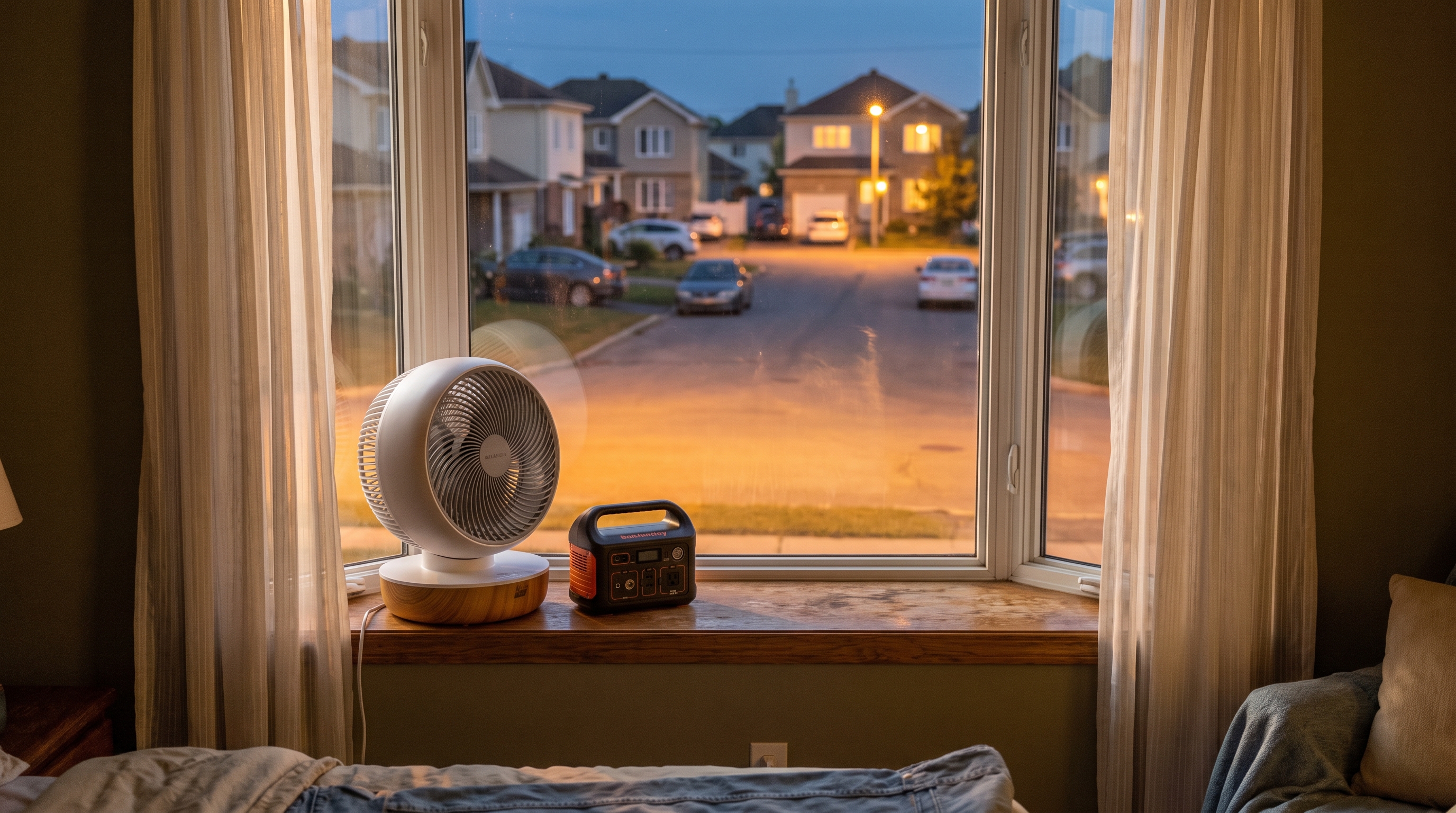
The July our AC died, it was ninety-six degrees inside the house by noon and still climbing. Lauren and I had prepped for a blackout. We had lights, a power bank, a radio. What we had not planned for was that the blackout came because of the heat. A three-day dome parked over Raleigh, every air conditioner in the county running flat out, until the grid could not carry the load and quit. So there we sat, ready for a power outage, in a house getting hotter by the hour, with the one machine that fixes that dead on the wall.
Disclosure: As an Amazon Associate, s1gma earns from qualifying purchases. Some links in this article are affiliate links. If you buy through them, s1gma may earn a small commission at no extra cost to you. It doesn't change what gets recommended.
Heat is the quiet one. It does not knock down trees or lead the evening news the way a hurricane does. But it has been the leading cause of weather-related deaths in the United States for decades, and the CDC ties roughly 1,200 deaths a year to it. It kills slowly, indoors, mostly to people who felt fine right up until they didn't. The dangerous part is not the afternoon high. It is the night that never cools off, the body that never gets a break, stacked over two or three days.
So you prepare for it the way you prepare for a blackout. In layers, in the order that matters. Move the air. Keep it moving when the power quits. Cool the body directly. And know the difference between "uncomfortable" and "call 911."
Why a heat wave is also a blackout
Here is the part most people miss. In summer, a heat wave and a power outage are frequently the same emergency. When a heat dome settles in, every air conditioner in the region kicks on at once, demand climbs toward what the grid can carry, and that same extreme heat saps the transmission lines and stresses the transformers until something trips. The hotter it gets, the likelier the power is to fail, at the exact moment losing it turns dangerous. NERC, which watches grid reliability, flags wide-area heat as a top summer risk every year for precisely this reason.
Which changes the shopping list. The heat-wave plan is not "buy an air conditioner." It is "stay survivable when the air conditioner stops." Very different lists.
Layer one: move the air
A moving breeze is the cheapest cooling you own. It will not lower the room temperature, but it lifts sweat off your skin and lets your body do what it evolved to do, which is most of the game while the room is still reasonable. The trick is fans that keep running when the wall outlets don't. That means battery, not corded.
One honest caveat first, and it matters. Once the room climbs into the 90s, especially with humidity, a fan stops protecting you. The CDC is blunt about this: past that point a fan is just pushing hot air across you, sweat can't evaporate fast enough to help, and leaning on one can give a false sense of safety. Fans are your first tool, not your last. After them, the plan is leaving, which we get to in layer four.
| Item | Why it earns the spot |
|---|---|
| FRIZCOL 24,000mAh rechargeable camping fan | The workhorse. A battery this big runs it for a day or more on a charge, it throws real air across a whole room, and the built-in LED doubles as a lantern the second the lights go out. If you buy one fan, buy this one. |
| Battery clip-on fan | Bendable legs wrap a crib rail, a bunk, a desk, a wheelchair, a walker. This is the one that puts air exactly where a specific person needs it. The baby. The elderly parent. The one who can't get up and move to the breeze. |
| FrSara wearable neck fan | Hands-free and bladeless, for the person who has to keep moving in the heat. Cooking, chores, checking on a neighbor, walking the dog before the sun is up. Cooling that follows you around. |
The move that wins a two-day heat wave is old and free. Close the house up during the day, blinds down, windows shut, hot air locked out. Then open everything at night and use the fans to pull the cooler air through. Fighting the afternoon sun with an open window is a losing battle. Bank the cool of the night instead.
Layer two: keep the air moving when the power quits
This is the layer that separates a heat-wave plan from a heat-wave wish. Battery fans buy you hours. A power station buys you days, and it is the difference between a miserable night and a dangerous one, especially for anyone who needs a machine to sleep, like a CPAP, or medication that has to stay cold.
| Item | Why it earns the spot |
|---|---|
| Jackery Explorer 240D power station | Runs the fans, keeps every phone charged, powers a CPAP through the night (without the heated humidifier), and holds a small cooler or medication fridge at temperature for hours. Refills from a wall outlet before the storm, from your car, or from the sun while the grid stays dead. |
The honest limit, because you will see people online claim otherwise. A power station this size cannot run a central air conditioner, and it cannot even reliably start a small window unit. A 5,000 BTU window AC pulls more running watts than this 300-watt station puts out, before you even count the surge when the compressor kicks on. That is fine, because that was never its job. Its job in a heat wave is fans, phones, medical devices, and keeping food and medicine cold, the things that carry a person through a hot night off the grid. When you genuinely need to lower the temperature of a room, the answer is almost never a battery. It is leaving for a building that still has power. More on that below.
If you want a real number for how much stored power, water, and food your household needs to ride out a multi-day event, run it through the supply calculator before you buy anything. And since a summer outage is still an outage, the power-outage kit covers the light-and-information layers this article assumes you already have.
Layer three: cool the body, not just the room
When you cannot cool the air, you cool the person. The body dumps heat through the big blood vessels that run close to the skin at the neck, the armpits, the groin. Put something cool there and you feel the drop fast, well before the room changes at all. (For an actual heat emergency, the fastest cooling is cold water over as much of the body as you can manage. Hold that thought for layer four.)
| Item | Why it earns the spot |
|---|---|
| FROGG TOGGS Chilly Pad cooling towel | Soak it, wring it out, drape it on your neck. Evaporation does the rest, and it stays cool for an hour before you re-wet it. Costs almost nothing, works with no power at all. The best few dollars in this whole article. |
| LMNT electrolyte drink mix | In prolonged heat you sweat out salt, not just water. The rule is simple: drink to thirst. But on a long, sweaty day, chugging plain water faster than you lose it can backfire and leave you cramping, dizzy, or worse. A packet of electrolytes in your bottle on those days keeps the balance right. (Skip the extra sodium if your doctor has you on a low-salt diet for your heart or kidneys.) |
The oldest trick still works too. Wet skin plus moving air. A spray bottle on your arms and neck, a fan aimed at it, and you have built a swamp cooler out of nothing. Set up one cool room and everyone lives in it. You cannot cool the whole house, so don't try.
Layer four: know the difference between uncomfortable and 911
This is the layer that saves lives, and it is not a product. It is knowing which situation you are actually in.
Set the leave-the-house line now, while you are calm. If the inside of your home climbs into the mid-90s and stays there overnight, move to somewhere with working air conditioning. A library. A mall. A friend's house on a different circuit. An official cooling center. There is no medal for staying.
Then learn the two-tier rule, because heat exhaustion and heat stroke are not the same emergency, and treating one like the other is how people die.
- Heat exhaustion (act early, at home): heavy sweating, a headache, nausea, dizziness, weakness, cool and clammy skin. Get the person into shade or AC, loosen their clothes, have them sip water, lay cool wet cloths on them. This is the "move to a cool place" situation.
- Heat stroke (call 911 right now): confusion, hot skin, a body that has stopped sweating, fainting. This is a medical emergency, not a drive around town looking for a cool building. Call 911, and while you wait, cool the person hard. Cold water over as much of them as you can, ice or cold packs at the neck, the armpits, the groin. Minutes matter here.
| Item | Why it earns the spot |
|---|---|
| FosPower NOAA emergency radio | Hand-crank and solar, so it never needs the grid that just failed. It wakes you with NOAA heat advisories and excessive-heat warnings before the worst of it lands, and tells you where the local cooling centers are when the cell network is jammed. Charges a phone in a pinch. |
Check on the people quietly most at risk. Older neighbors, anyone living alone, anyone on medication that changes how they handle heat. A two-minute knock on a door during a heat wave is one of the highest-value things you will ever do, and it costs nothing.
What people get wrong
Thinking of heat as an afternoon problem. It is a cumulative one. One hot afternoon is nothing. Three days and nights where your body never cools down is what actually hurts you, and the warm night that never drops below the low 80s is the real tell. Plan for the multi-day version.
Counting on the AC. The one appliance everyone assumes will save them is the one most likely to die, either because the grid fails under the load or because it was never sized for a record heat wave. Every layer above is insurance on the moment the AC quits.
Drinking on autopilot. Drink to thirst. On long, sweaty days, add electrolytes so you are replacing salt and not just diluting it. The people who get into trouble are usually at one of the two extremes, ignoring thirst entirely or force-drinking gallons of plain water.
Staying too long. Toughness is not a cooling strategy. The people who get hurt are almost always the ones who decided, again and again, to wait it out a little longer. Set the number now. When you hit it, go.
TL;DR
To prepare for a heat wave, plan for the version where the power fails too, because region-wide AC demand is what knocks the grid out in the first place. Stack four layers: battery-powered fans to move air without the grid, a portable power station to keep those fans and any medical devices running when the outlets die, direct body-cooling with a wet cooling towel and sensible hydration, and a hand-crank NOAA radio plus a pre-decided "when it hits this, we leave" threshold. Close the house by day, vent it at night, set up one cool room, and check on at-risk neighbors. Learn the one rule that matters most: heat exhaustion (heavy sweating, headache, dizziness) means cool down and move; heat stroke (confusion, no sweating, fainting) means call 911 immediately.
FAQ
How do you stay cool in a house with no power? Move air with battery-powered fans, cool your body directly with a wet cooling towel on your neck, close the house against the sun by day and vent it at night, and set up a single cool room instead of trying to cool the whole place. A portable power station keeps the fans and any medical devices running. If the indoor temperature climbs into the mid-90s and stays there overnight, leave for a building with working air conditioning.
Do fans actually help in extreme heat? Up to a point. While the room is still reasonable, a fan pulls sweat off your skin and helps your body cool itself. Once the room is in the 90s, especially with humidity, the CDC says a fan will not prevent heat illness and can just push hot air onto you. Treat fans as your first tool, not your only one.
Should you drink water or electrolytes during a heat wave? Drink to thirst. For prolonged heavy sweating over hours, add an electrolyte mix so you replace the salt you are losing, not just the water. The danger at the other extreme is real too: force-drinking large volumes of plain water faster than you sweat it out can dilute your blood sodium and make you sick, so don't overdo it either way.
Can a portable power station run an air conditioner? Not really. A compact station will run fans, charge phones, keep a CPAP going, and hold a small fridge, but it cannot run a central AC and cannot reliably even start a small window unit, which draws more than most compact stations output. If you need to actually cool a room, the move is relocating to a building that still has power, not buying a bigger battery.
When should you leave your home during a heat wave? When the inside of your home climbs into the mid-90s and stays there overnight, or the moment anyone shows heat exhaustion: heavy sweating, headache, nausea, dizziness. Decide that threshold before the heat wave, not during it. One hard exception: if a person becomes confused or stops sweating, that is heat stroke, not a reason to go looking for AC. Call 911 and cool them down immediately.
Sources
- National Weather Service — Weather-Related Fatality Statistics — heat has been the leading cause of weather-related deaths in the US.
- CDC — Heat and Your Health — ~1,200 heat deaths/year, fan guidance, who is most at risk.
- CDC — Warning Signs of Heat-Related Illness — heat exhaustion vs. heat stroke.
- CDC / NIOSH — Heat-Related Illnesses — symptoms and emergency response.
- EPA — Extreme Heat — multi-day events and warm-night risk.
- NWS HeatRisk — overnight heat as a key risk driver.
- NERC — 2025 Summer Reliability Assessment — heat-driven demand and summer grid risk.
- Hew-Butler et al. — Exercise-Associated Hyponatremia, 2017 Update (Frontiers in Medicine) — the over-drinking risk.
- StatPearls — Cooling Techniques for Hyperthermia (NCBI) — fastest cooling methods.
- Jackery Explorer 240 v2 — specifications — 256 Wh / 300 W output.