
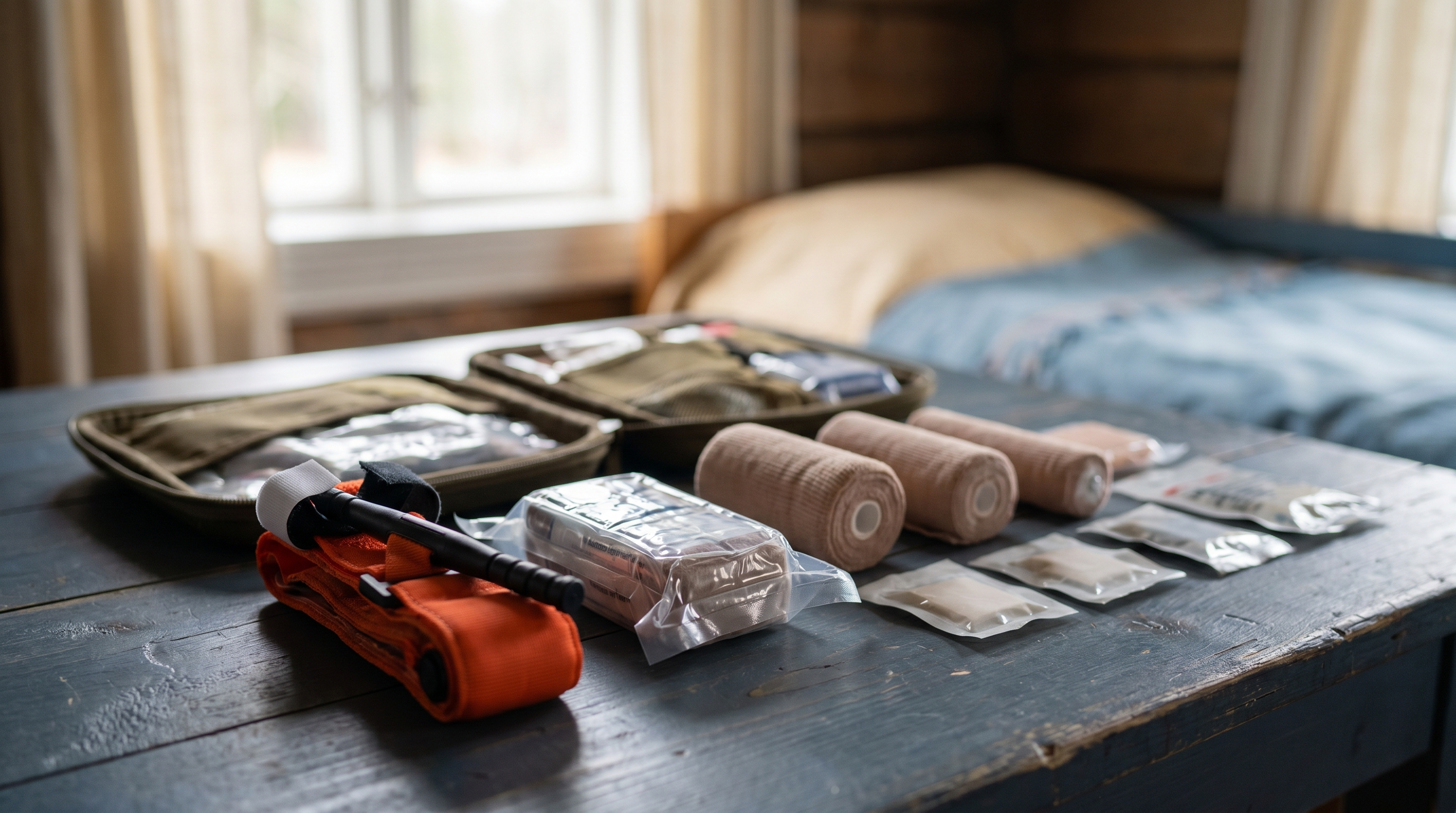
I came up on the wreck about a minute after it happened, on the shoulder of a road outside Raleigh, a pickup and a guardrail that had clearly disagreed. The driver was out and conscious and holding his forearm, and the forearm was doing the thing arms are not supposed to do, which is bleed in a steady dark pulse that does not slow down on its own. I had a first-aid kit in the truck. It had band-aids in it. Eleven kinds of band-aid, a foil packet of antibiotic ointment, and a pair of tweezers. It was, in that exact moment, completely useless.
Disclosure: Some links in this article are affiliate links. If you buy through them, s1gma may earn a small commission at no extra cost to you. It doesn't change what gets recommended.
He was fine, in the end. Another driver had an actual trauma kit and knew how to use it, and the difference between that guy and me was not courage or calm. It was about forty dollars of equipment and one afternoon of training that I did not have and he did. That bothered me for a long time, and this article is the result.
There is a category gap that almost nobody thinks about until they are standing in it. The kit that handles the scraped knee and the kitchen burn is not the kit that handles bleeding. They are different tools for different problems, and most people own a lot of the first kind and none of the second.
Two things up front. This is not medical advice and it is not a substitute for training. The single best thing on this entire page is not a product, it is a free Stop the Bleed course, and I will keep saying that. And in any real emergency, the first move is always to call 911. Everything here is about the minutes before help arrives.
The clock nobody tells you about
Here is the number that reframes everything. A person with a severe arterial bleed can die in as little as five minutes, and sometimes faster. The medical literature on hemorrhage control puts the window for the worst bleeds at somewhere between 90 seconds and five minutes.
Now line that up against how long it takes an ambulance to reach you. In a city on a good day, several minutes. In a rural area, much longer. The uncomfortable math is that for the most serious bleeding, the person already there is the one who has to stop it. That is the entire reason the Stop the Bleed campaign exists, launched in 2015 on the same logic as CPR and public defibrillators: the bystander is the first responder whether they signed up for it or not.
A trauma kit is what lets that bystander be useful instead of holding a fistful of band-aids on the side of a road.
The tourniquet, which is the whole point
For life-threatening bleeding from an arm or a leg, the modern guidance is clear and it has changed in the last fifteen years: a tourniquet is the first-line treatment, not a last resort. The old fear that tourniquets cost people limbs came from improvised junk and bad technique. A real one, applied correctly and converted by professionals within a couple of hours, is how you keep someone alive long enough to reach a hospital.
Buy a real one. This is the single item where the knockoffs on the big marketplaces, the suspiciously cheap ones, genuinely get people killed because they snap or do not actually occlude the artery.
| Item | Why it earns a spot | Price |
|---|---|---|
| North American Rescue CAT Gen 7 Tourniquet | The genuine CAT, the one actually carried by the military and EMS. One-handed application on yourself, proven design. The non-negotiable centerpiece of the kit. | $34.95 |
The technique in one sentence, which is not a substitute for the course: high and tight on the limb above the wound, crank the windlass until the bleeding stops even though it hurts, and write down the time. That last part matters more than people think, which is why you take the class.
Packing and pressure, for the bleeds a tourniquet cannot reach
A tourniquet only works on limbs. For a deep wound to the groin, armpit, neck, or torso, where you cannot get a band above it, the answer is wound packing and hard direct pressure. You physically stuff gauze into the wound, down to the source, and press.
| Item | Why it earns a spot | Price |
|---|---|---|
| Hemostatic Combat Gauze, Z-fold | Gauze treated with a clotting agent. You pack it into a deep wound to help the blood clot faster than it can flow out. This is the junctional-bleed tool. | $15.99 |
| EVERLIT Israeli 6-Inch Emergency Bandage | A pressure dressing with a built-in bar that lets you apply hard, focused pressure and walk away with both hands free. Brilliant, simple, battle-proven. | $9.99 |
| Conforming Stretch Gauze Rolls, 4in (24 pack) | The cheap consumable you go through fast. Wrapping, securing, packing the wounds that are bad but not arterial. Buy more than you think. | $9.99 |
The serious-but-not-arterial tier
Not every real injury is a gusher. Some are deep cuts, bad burns, the kind of thing that is well past a band-aid but is not going to kill anyone in five minutes. Worth having, separate from the bleeding-control core.
| Item | Why it earns a spot | Price |
|---|---|---|
| EVERLIT Zip-Stitch Wound Closure Kit | Closes a gash without a needle when stitches are hours away. For the deep cut that needs holding shut, not a tourniquet. | $29.99 |
| Water-Jel Sterile Burn Dressing | Hydrogel dressings that cool and protect a burn instead of the butter-and-panic approach. Cooking and grid-down heat make burns common. | $29.99 |
The part that matters more than any of it
The gear is the easy half. The hard half is the training, and the gear without it is theater. A tourniquet in a drawer that you have never tightened on your own leg is not preparedness, it is a prop.
The Stop the Bleed course is free, runs a couple of hours, and is taught constantly at hospitals, fire stations, and community centers. You leave knowing how to recognize a life-threatening bleed, pack a wound, and apply a tourniquet correctly. Take it. Take your partner. It is the highest-return two hours in all of preparedness, and unlike the kit, it weighs nothing and is always with you.
Keep the kit somewhere you can reach in seconds, not buried in a closet. One in the car, where bad bleeding actually tends to happen. And practice, with the actual tools, before the morning you come up on a wreck and find out your kit is eleven kinds of band-aid.
TL;DR
Severe bleeding can kill in under five minutes, which is faster than help can usually arrive, so the person already there has to handle it. A trauma kit is a different thing from a boo-boo kit. The core is a real tourniquet, the genuine CAT, not a marketplace knockoff, for limb bleeds, plus hemostatic gauze and a pressure dressing for the wounds a tourniquet cannot reach. Add wound-closure strips and burn dressings for the serious-but-not-arterial stuff. Keep one in the car. And understand that the free Stop the Bleed course matters more than anything you can buy, because gear you cannot use is just expensive decoration. Call 911 first, always. This is not medical advice, it is the argument for going and getting trained.
Sources
- Stop the Bleed (American College of Surgeons) - the national bleeding-control campaign, course finder, and the bystander-as-first-responder rationale.
- DHS, Stop the Bleed - Tourniquet - federal guidance on tourniquets as a first-line intervention for life-threatening extremity bleeding.
- NIH StatPearls, Hemorrhage Control - the clinical literature behind the time-to-death window and tourniquet conversion guidance.
- Ready.gov, Build A Kit - where bleeding-control supplies fit in the broader emergency kit.