
Florida Drought and Meatpacking Strikes: A Dual Threat to Food Security
S1GMA Intel
Friday, May 8, 2026
6 min read
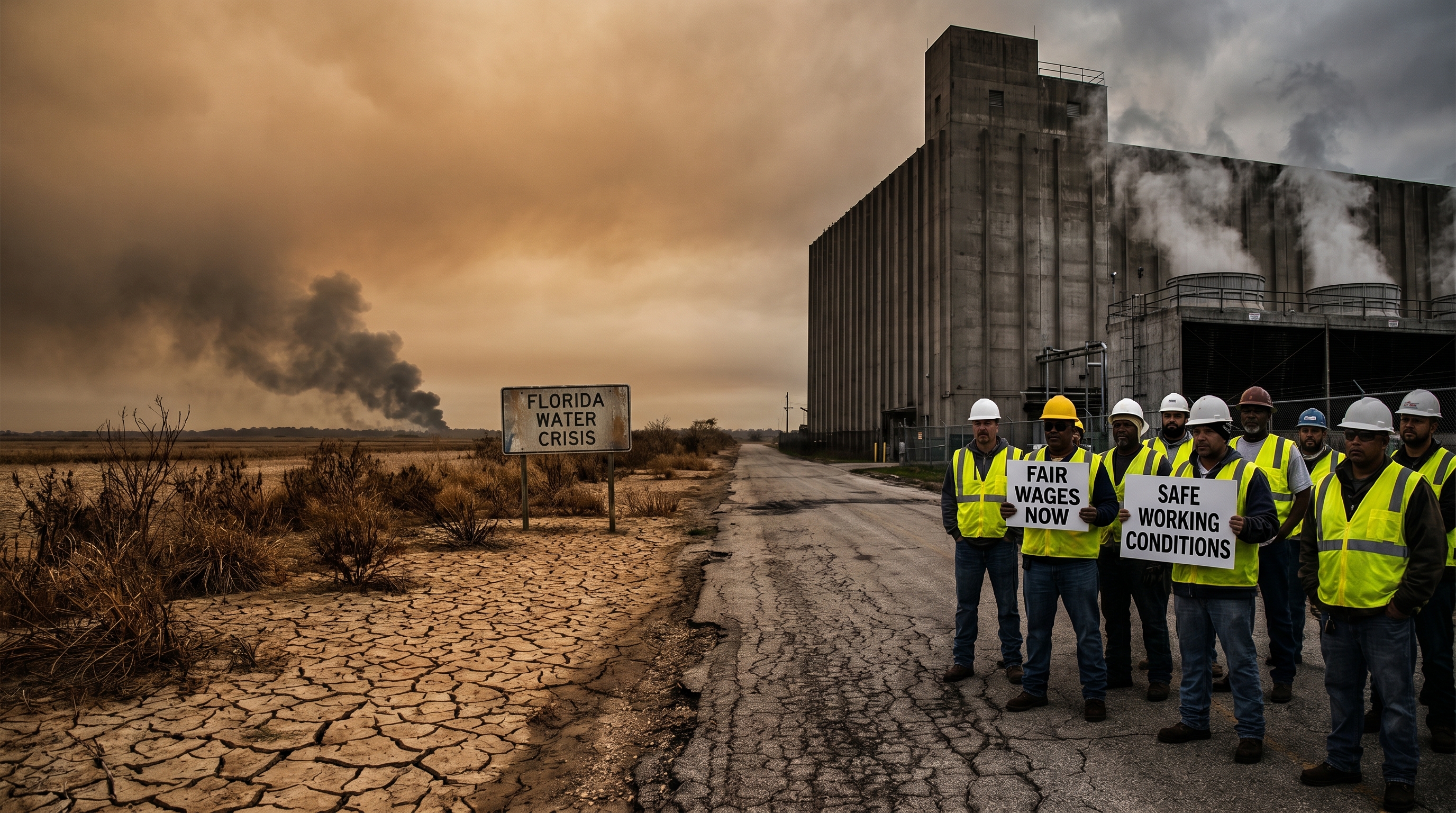
Florida's worst drought in 25 years and expanding strikes at JBS meatpacking plants are creating a perfect storm for the U.S. food supply chain and regional safety.
The convergence of environmental crisis and labor instability is currently testing the resilience of the American food supply chain. In the Southeast, Florida is grappling with its most severe drought in a quarter-century, triggering a state of emergency as wildfires consume tens of thousands of acres. Simultaneously, the nation's beef infrastructure is facing a double-sided squeeze: a historic contraction of cattle herds due to persistent drought in the Great Plains and a series of expanding labor strikes at JBS USA meatpacking facilities in Colorado. For those focused on preparedness, these are not isolated incidents but a series of compounding stressors on a fragile system.
What We Know
Florida is currently facing a historic environmental crisis. Governor Ron DeSantis has declared a state of emergency as 98 percent of the state experiences drought conditions, with 85 percent classified as 'severe drought'—the highest level recorded since 2001. The Florida Forest Service reports that since January 1, 2026, more than 650 wildfires have burned over 21,000 acres. Significant rainfall deficits, exceeding 13 inches in major hubs like Jacksonville and Tallahassee, have turned vegetation into tinder. In response, 34 of Florida's 67 counties have implemented emergency burn bans, and all five water management districts have enacted water shortage restrictions. The state of emergency includes the waiver of agricultural weight restrictions to expedite crop transport, signaling the severity of the threat to the state's agricultural output.
While Florida burns, the U.S. cattle industry is hitting a 75-year low. According to USDA data, the total number of cattle and calves in the United States has plummeted to levels not seen since 1951. This decline is driven by multi-year droughts in key ranching states like Texas, Oklahoma, and Kansas. These conditions have decimated grazing lands, forcing ranchers into 'liquidation'—selling off breeding stock because they can no longer afford to feed or water them. This creates a dangerous cycle: while immediate slaughter rates might stay high, the long-term breeding pool is shrinking, ensuring supply constraints for years to come.
Compounding this supply shortage is a significant disruption in processing. In Greeley, Colorado, over 3,000 workers at the JBS beef packing plant—a facility that processes approximately 5,000 head of cattle per day—have been on strike for over three weeks. The United Food and Commercial Workers (UFCW) Local 7 initiated the walkout citing inadequate wages and safety concerns. The strike has now expanded to a JBS facility in Denver, where 97 percent of union members voted to strike over alleged labor law violations. JBS is the world's largest meatpacking company, and these facilities represent critical nodes in the national food infrastructure.
Why It Matters for Preparedness
This situation represents a 'perfect storm' for food security and regional safety. The primary concern for the preparedness-minded individual is the fragility of the 'just-in-time' delivery system. When a facility like the Greeley plant—which handles a significant percentage of daily U.S. beef production—goes offline during a period of record-low cattle inventory, price volatility is inevitable. We are seeing a transition from 'expensive beef' to 'unreliable beef.'
In Florida, the drought is more than an agricultural issue; it is a direct threat to property and infrastructure. The Keetch-Byram Drought Index (KBDI), a measure of forest fire potential, has reached critical levels. When the KBDI exceeds 450-500, fire behavior becomes intense and difficult to control. With current readings in parts of Florida hitting these benchmarks, a single spark from yard equipment or a discarded cigarette can trigger a fast-moving interface fire. Furthermore, the drought is threatening freshwater supplies in South Florida, increasing the risk of saltwater intrusion into aquifers, which could have long-term implications for potable water availability.
The cattle crisis is particularly concerning because it cannot be fixed quickly. Unlike poultry or pork, which have shorter reproductive cycles, rebuilding a national cattle herd takes years. Even if the drought in the Great Plains broke tomorrow, the impact of the current liquidation will be felt at the grocery store through 2028 and beyond. We are entering a period where animal protein will likely become a luxury good rather than a staple.
What You Can Do
Immediate action is required to mitigate the risks posed by these developments. If you are in Florida or a drought-affected region, your first priority is fire hardening your property. Create a 'defensible space' by maintaining a 30-foot buffer of cleared vegetation around your home. Clean your gutters of dry pine needles and leaves, as these are the primary ignition points for embers during a wildfire. Adhere strictly to burn bans; the current conditions do not allow for error.
Regarding food security, now is the time to diversify your protein sources. Do not rely on the local supermarket's meat counter for your weekly needs. Consider the following steps:
- Establish relationships with local, small-scale ranchers. These producers are often more resilient to national strikes and can provide 'quarter' or 'half' beef shares that can be stored long-term.
- Invest in long-term storage. If you have the means, a chest freezer backed by a reliable power source (like a solar generator) allows you to buy in bulk before the full weight of the JBS strikes and herd liquidation hits retail prices.
- Master pressure canning. Canning meat is a shelf-stable way to preserve protein without relying on the electrical grid.
- Audit your water storage. If you are in a drought zone, ensure you have at least one gallon of potable water per person per day for a minimum of two weeks, stored in a cool, dark place.
Finally, adjust your financial planning. Food inflation is not cooling in the meat sector. Expect a 10-20% increase in retail beef prices over the next quarter if the JBS strikes persist and the drought continues to force herd liquidations.
Looking Ahead
Monitor the weather patterns closely. While a transition from La Niña to a neutral phase is predicted by summer, the 'spring fire peak' in April and May remains the most dangerous window for Florida. If the rainy season is delayed, we could see a catastrophic wildfire season that exceeds the 2001 records.
On the labor front, watch for the UFCW Local 7 negotiations. If the strike spreads to other major meatpacking hubs in the Midwest, we could see localized meat shortages within 7 to 10 days of a total stoppage. JBS is currently shifting production to other plants, but the system has very little 'slack.' Any further disruptions—whether from more strikes, cyberattacks, or further environmental disasters—could lead to empty shelves in the protein aisle. Preparedness is not about panic; it is about recognizing these signals and positioning yourself so that you are not dependent on a failing system.