
Florida Drought and JBS Strikes: A Dual Threat to Food Security and Safety
S1GMA Intel
Friday, May 8, 2026
6 min read
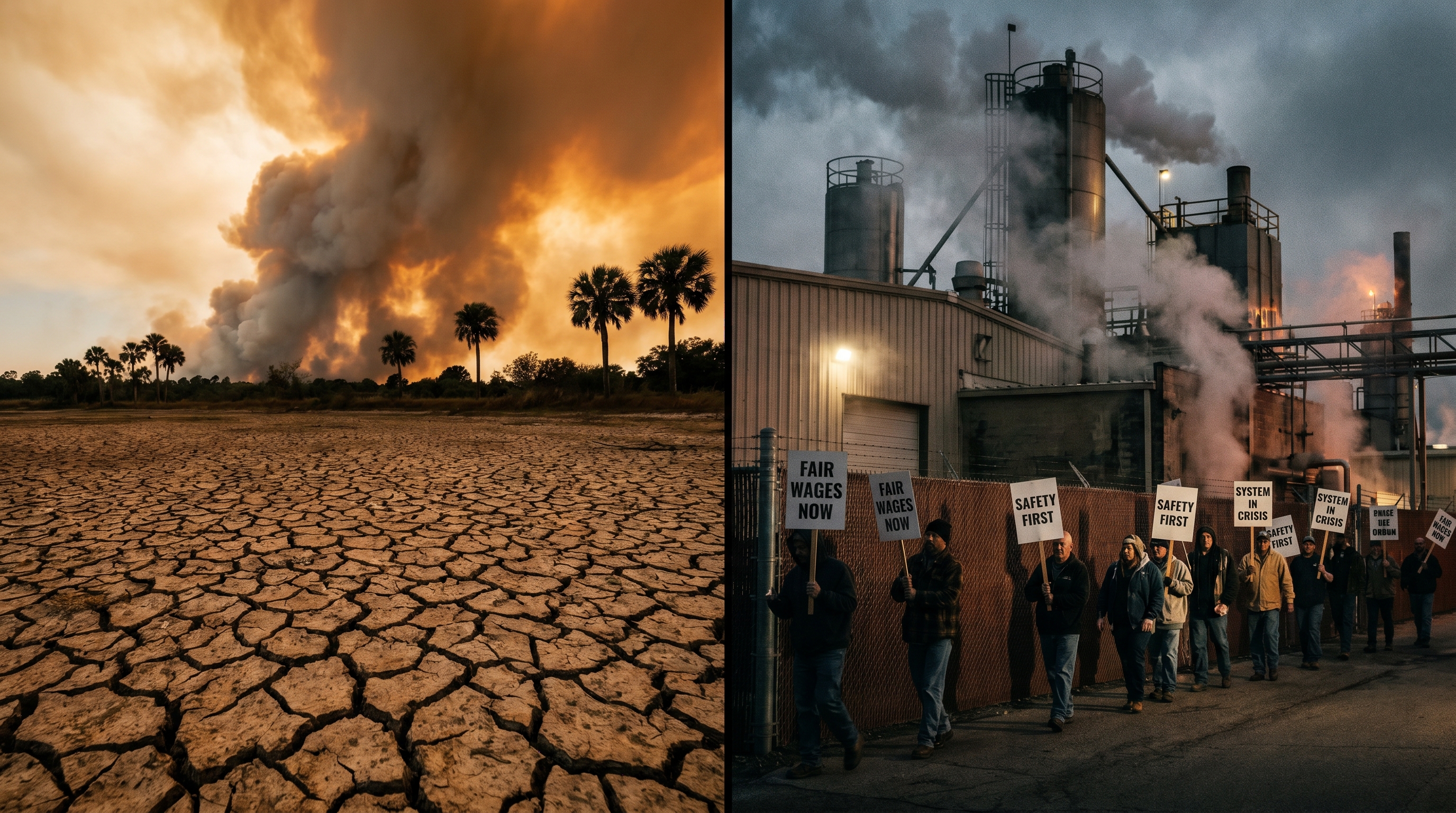
Florida's worst drought in 25 years and expanding strikes at JBS meatpacking plants are creating a perfect storm for supply chain disruption and fire risk.
The intersection of environmental instability and labor unrest is currently creating a high-friction environment for the American food supply chain and regional safety. In Florida, a state of emergency has been declared as the worst drought in a quarter-century fuels a dangerous wildfire season. Simultaneously, the U.S. cattle industry is hitting a 70-year inventory low, a crisis compounded by expanding labor strikes at JBS meatpacking facilities in Colorado. For those focused on preparedness, these are not isolated incidents; they are compounding signals of a fragile system under significant stress. This is the reality of the current threat landscape: environmental extremes are no longer just local problems—they are catalysts for national supply chain failures.
What We Know
Florida is currently grappling with its most severe drought conditions since 2001. According to the Florida Forest Service and the South Florida Water Management District, 98 percent of the state is experiencing drought, with 85 percent classified as 'severe.' The rainfall deficit in major hubs like Jacksonville and Tallahassee has exceeded 13 inches, leaving vegetation tinder-dry. Since January 1, 2026, over 650 wildfires have burned more than 21,000 acres across the state. Governor Ron DeSantis has declared a state of emergency, which includes waiving agricultural weight restrictions to expedite crop transport and implementing burn bans in 34 of the state’s 67 counties.
In the Western U.S., the cattle industry is facing a historic contraction. Persistent drought across the Great Plains—specifically in Texas, Oklahoma, and Kansas—has decimated grazing lands. This has forced ranchers into a 'liquidation' phase, selling off breeding stock because they can no longer afford to feed or water them. Consequently, U.S. cattle inventory has dropped to its lowest level since 1951. While this creates a temporary surge in meat availability as herds are slaughtered, it ensures a long-term supply vacuum that will take years to rectify.
Adding to this volatility, the processing sector is facing significant labor disruptions. More than 3,000 workers at the JBS beef packing plant in Greeley, Colorado, have entered their third week of a strike led by UFCW Local 7. This facility alone processes approximately 5,000 head of cattle per day. The strike has now expanded to a JBS plant in Denver, where workers voted 97% in favor of a walkout citing labor law violations. JBS, the world’s largest meatpacker, is attempting to maintain operations at limited capacity, but the bottleneck in the mid-stream supply chain is becoming critical.
Why It Matters for Preparedness
The convergence of these events highlights three primary areas of concern for the preparedness-minded individual: food security, regional safety, and economic volatility.
First, the meat supply chain is facing a 'pincer movement.' On one side, the raw supply (cattle) is at a 70-year low due to environmental factors. On the other side, the processing capacity (meatpacking) is being throttled by labor disputes. This is a recipe for record-high retail prices and potential localized shortages. When the world’s largest meatpacker loses capacity at major plants, the ripple effect through the retail sector is inevitable. We are moving from a period of high prices to a period of potential scarcity.
Second, the wildfire risk in Florida is a direct threat to infrastructure and health. The closure of Interstate 95 due to smoke and fire is a reminder that these events disrupt more than just the immediate burn zone. They impact evacuation routes, logistics, and air quality. The Keetch-Byram Drought Index (KBDI) has reached levels indicating extreme fire danger, meaning even minor sparks from yard equipment or passing vehicles can ignite massive blazes.
Third, the 'liquidation cycle' in the cattle industry is a lagging indicator of long-term food inflation. Rebuilding a national herd is a multi-year process. Even if the drought in the Plains broke tomorrow, the impact on beef prices and availability would persist through 2027 and 2028. Preparedness requires looking beyond the current news cycle to the multi-year recovery period required for biological assets like cattle.
What You Can Do
Actionable preparedness is about mitigating risk before the crisis peaks. Based on these intelligence signals, here are the steps you should take immediately:
-
Secure Your Food Supply: If you rely on beef as a primary protein source, now is the time to inventory your deep freeze. Consider purchasing a quarter or half-cow from a local producer to bypass the industrial processing bottlenecks at JBS. Local lockers and small-scale processors are less likely to be affected by national labor strikes.
-
Fire-Harden Your Property: If you are in Florida or any drought-stricken region, create a 30-foot 'defensible space' around your home. Clear dry vegetation, clean out gutters, and remove flammable debris from under decks. Ensure your garden hoses are accessible and that you have a clear evacuation plan that doesn't rely on a single highway.
-
Water Conservation and Storage: With water management districts in Florida already implementing restrictions, ensure you have at least one gallon of potable water per person per day stored for at least two weeks. Check your private wells if you have them; falling aquifers increase the risk of pump failure or saltwater intrusion.
-
Monitor Air Quality: Wildfire smoke can travel hundreds of miles. Ensure you have high-quality air filters (MERV 13 or higher) for your HVAC system and N95 masks on hand for outdoor activity during high-smoke days.
-
Financial Adjustments: Anticipate a 15-25% increase in beef and related protein prices over the next quarter. Adjust your household budget now to absorb these costs or pivot to alternative protein sources that are less affected by the current processing strikes.
Looking Ahead
The immediate focus must remain on the weather transition. While climatologists predict a shift from La Niña to a neutral phase by summer, the 'spring fire peak' in April and May remains the highest risk period for Florida. If significant rainfall does not materialize before June, we could see the state of emergency extended and more aggressive water rationing.
Regarding the JBS strikes, watch for the involvement of federal mediators. If the Greeley and Denver strikes continue into a second month, expect to see major retailers implementing purchase limits on certain beef products. Furthermore, if other meatpacking unions see success in Colorado, we could see a 'contagion' effect of labor actions across other major processors like Tyson or Cargill, which would turn a localized disruption into a national food security crisis. Stay vigilant, stay stocked, and maintain your buffers.