
Cuba’s Grid Collapse: A Case Study in Geopolitical Energy Warfare
S1GMA Intel
Monday, March 30, 2026
6 min read
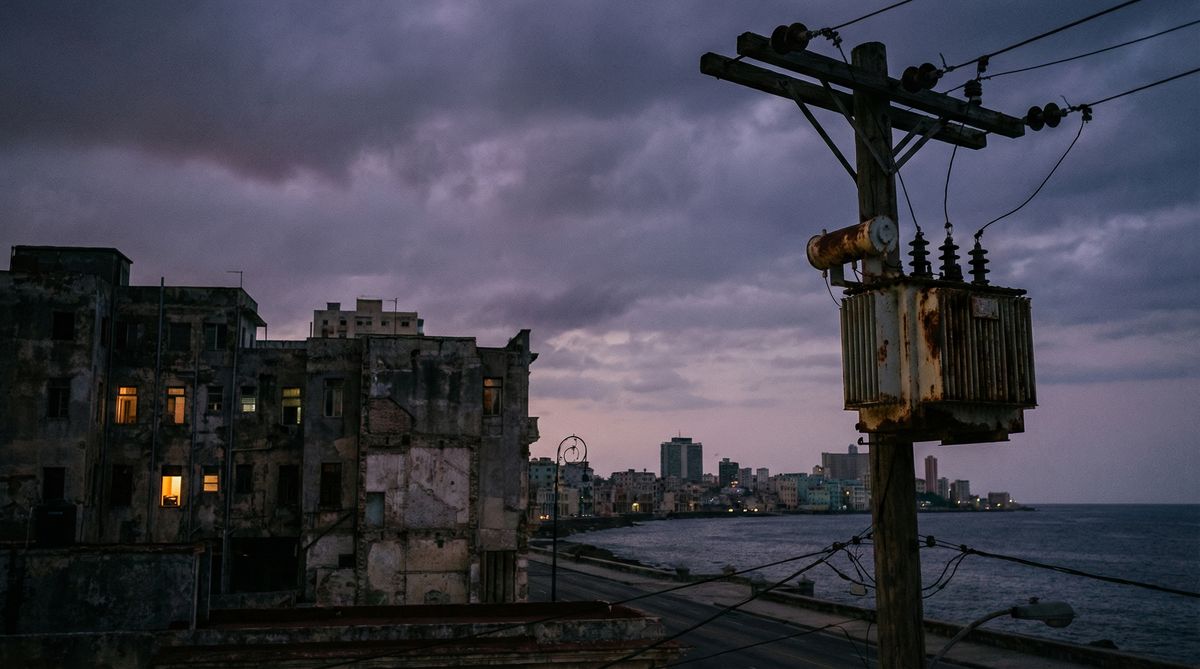
Cuba faces its third total blackout in a month as US sanctions and infrastructure decay collide. Meanwhile, Ukraine weaponizes energy transit and Middle East drones target digital hubs. Here is what this means for your preparedness.
A nation of 10 million people has just been plunged into total darkness for the third time in a single month. This isn't a hypothetical exercise or a tabletop simulation; it is the current reality in Cuba. As the island’s national electrical system (SEN) suffers repeated, catastrophic failures, the situation serves as a stark warning of how quickly modern society unravels when the lights go out and stay out. The collapse of the Cuban grid is not merely a technical failure; it is the result of a perfect storm of aging infrastructure, geopolitical maneuvering, and the weaponization of energy supplies. For the preparedness-minded, the events unfolding across the Caribbean, Eastern Europe, and the Middle East provide a blueprint for the types of systemic failures we must be ready to navigate.
What We Know
Cuba is currently experiencing a profound energy emergency. On March 21, 2026, the national grid suffered a total disconnection, leaving the entire population without power. This follows two similar collapses earlier in the month. The immediate catalyst for the latest failure was the Antonio Guiteras thermoelectric plant in Matanzas—the island's largest—going offline. However, the root causes are systemic. Cuban officials point to a combination of three factors: a severe shortage of fuel, the dilapidated state of thermoelectric plants that have seen decades of underinvestment, and a surge in demand from the growing private sector.
Geopolitically, the situation is a pressure cooker. The Cuban government attributes the fuel crisis to a 'maximum pressure' campaign and an oil blockade by the United States, which has reportedly intensified under the Trump administration. This blockade has hindered the arrival of tankers from traditional allies like Venezuela. In response, Cuba is looking toward Russia. The Russian-flagged tanker Anatoly Kolodkin, carrying 730,000 barrels of fuel, is currently transiting the Atlantic and is expected to reach the island within ten days. This shipment is critical, as Cuba currently produces only about 40% of the petroleum it requires to function.
Simultaneously, the global energy landscape is being reshaped by active conflict. In Eastern Europe, Ukraine has shifted its strategy to target Russian energy infrastructure with surgical precision. Recent strikes have hit the Druzhba pipeline—a vital artery for Russian crude into Central Europe—specifically to pressure nations like Hungary and Slovakia that have remained diplomatically close to Moscow. Furthermore, Ukrainian Special Operations Forces (SSO) have successfully destroyed Russian Iskander missile systems in Crimea and targeted fuel production plants in Tver Oblast that manufacture specialized rocket and aviation fuel.
In the Middle East, the threat has moved from the physical battlefield to the digital and sovereign heart of the region. Drone strikes have recently targeted Amazon Web Services (AWS) data centers in the UAE and Bahrain, causing significant service disruptions. Perhaps more concerning for European stability is the escalation of drone attacks on Cyprus, an EU member state. This has forced Brussels to consider Article 42.7 of the Lisbon Treaty, the common defense clause, which could potentially draw the entire European Union into a wider regional conflict.
Why It Matters for Preparedness
The events in Cuba demonstrate that a national power grid is a 'just-in-time' system. When the fuel stops or a single major node fails, the entire network can cascade into a total blackout within minutes. This isn't just about losing lights; it's about the failure of every secondary system that relies on electricity. In Cuba, the blackout has disabled water pumps, leading to a secondary crisis in water distribution. Food supplies are rotting in the tropical heat because refrigeration is non-existent. Communication networks are failing, leaving the population in an information vacuum.
We are also seeing the emergence of 'Energy Warfare' as a primary tool of statecraft. Whether it is the US blockade on Cuba or Ukraine’s strikes on the Druzhba pipeline, energy is being used to coerce populations and governments. If you are dependent on a centralized, vulnerable grid, you are a pawn in these geopolitical games.
Finally, the targeting of AWS data centers in the Middle East highlights the physical vulnerability of the 'cloud.' Our modern lives are built on digital infrastructure that resides in physical buildings. When those buildings are hit by drones, the digital services we rely on for banking, logistics, and communication can vanish instantly. Preparedness is no longer just about having extra food; it’s about decoupling your survival from these fragile, centralized systems.
What You Can Do
Actionable preparedness requires moving away from total dependence on centralized utilities. Based on the failures observed in this intelligence signal, here are the steps you should take immediately:
-
Secure Independent Water Access: In Cuba, the power failure became a water failure. If you rely on a municipal system or an electric well pump, you need a manual backup. Invest in a high-quality gravity-fed filtration system (like a Berkey or Sawyer) and, if you have a well, install a manual hand pump. Store a minimum of one gallon per person per day for at least two weeks.
-
Build a Tiered Energy Backup: Do not rely on a single generator. Use a tiered approach:
- Tier 1: Small portable power stations (LiFePO4) to keep phones and radios charged.
- Tier 2: A portable solar array to recharge those stations.
- Tier 3: A larger dual-fuel generator (propane/gasoline) for heavy loads like refrigeration, but only run it in intervals to conserve fuel.
-
Harden Your Communications: When the grid goes down, the internet usually follows. Maintain a physical library of maps, medical manuals, and repair guides. Invest in an AM/FM/Shortwave weather radio with a hand crank. For local coordination, ensure you have GMRS or HAM radio capabilities and a plan to use them with your local network.
-
Manage Food Spoilage: In a long-term blackout, your freezer is a liability. Have a plan to process perishables immediately (canning or drying) or consume them first. Shift your long-term storage to shelf-stable, calorie-dense foods that do not require cooking or refrigeration.
-
Maintain Physical Cash: As seen with the AWS outages, digital payment systems are vulnerable. Keep a 'blackout kit' of small-denomination cash in a secure location to handle transactions when the local network is offline.
Looking Ahead
The situation in Cuba is likely to worsen before it stabilizes. The arrival of Russian oil may provide a temporary reprieve, but it will not fix the underlying infrastructure decay. We must watch for signs of social unrest; prolonged blackouts are historically a precursor to civil volatility. If the Cuban government cannot restore basic services, we may see a mass migration event or a significant shift in regional security.
In the broader theater, Ukraine’s success in targeting Russian energy nodes will likely lead to Russian retaliation against European or Ukrainian energy infrastructure. This 'tit-for-tat' energy warfare could lead to localized blackouts in Eastern and Central Europe.
Most critically, watch the Middle East for further 'infrastructure-as-target' escalations. If drone strikes on data centers become a standard tactic, the global digital economy will face a level of risk it is currently unprepared to handle. The era of the 'safe' rear echelon is over; in modern conflict, the grid, the pipeline, and the data center are the front lines.